






-240x240w.jpg "Handbags and Sporranbags")


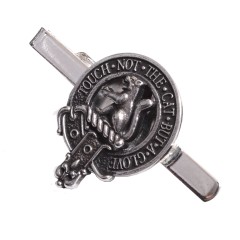




















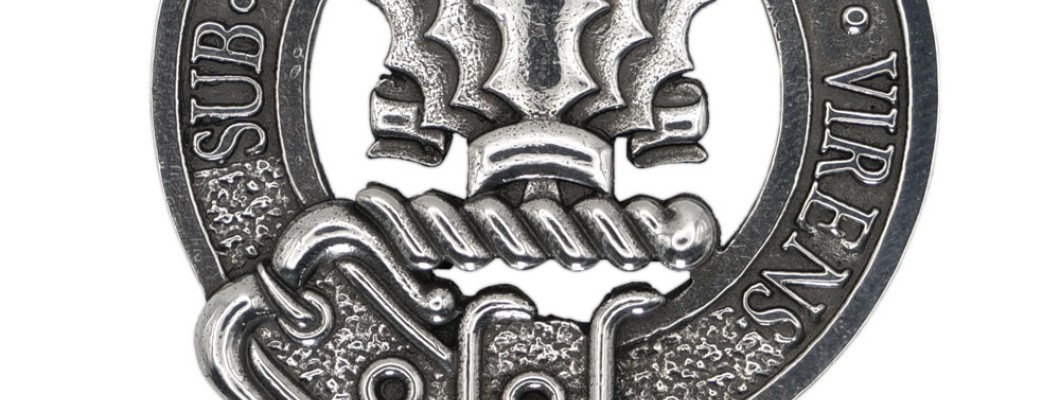
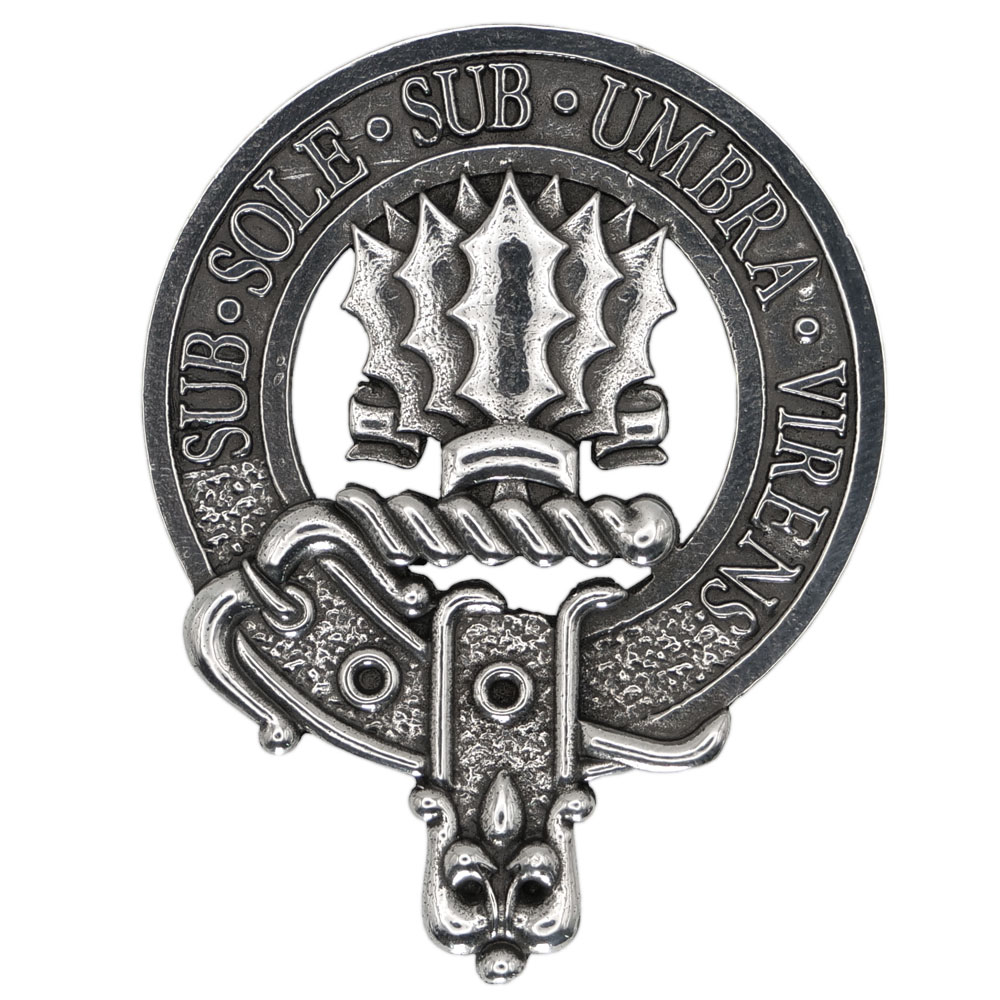
The crest of the chief of Irvine is a sheaf of holly leaves,
bound by a red ribbon. At its core this crest is ‘canting’, meaning it’s a
visual pun on the ‘vine’ in the name. That the leaves are bound together
represents the various branches of the family held together under the chiefs. Although
the chiefs could have chosen other native vines, such as ivy, holly has sharp
edges, creating a statement that the Irvines are tough and know how to defend
themselves.
The holly leaves appear on the shield of the seal of
Alexander Irvine of Belteis in 1484, and for Alexander Irvine of Drum in 1616
(Willam Rae MacDonald, Scottish Armorial Seals, 1904, 179-80). Lindsay
of the Mount’s Armorial of 1599 and the Balfour Manuscript of about 1633 show
three holly leaves as the Irvine shield. Sometime between 1672 and 1678 the
laird of Drum registered his crest as specifically nine holly leaves with the
motto (R.R. Stoddart, Scottish Arms being a Collection of Armorial Bearings
1370-1678, p.377)
The motto is ‘sub sole sub umbra virens’ (flourishing both
in sunshine and in shade). This Latin phrase seems to have originated in Jacobus
Typotius (1540–1601)’s Symbola divina et humana of 1601. In this he includes
SVB SOLE SVB VMBRA VIRENS.
E navali erumpit navis: folent
enim navigia in navalia hyeme subduci; & fucclamatur Rex, sub Sole, id est,
in alto, & sub umbra, id est, tecto: sed quid clara obscura? virens: id est
non situ putrens aut dilabens vetustate, ne incautam, clamat, liceat, ut navis,
fortunæ fluctibus jactetur, nec adversis frangi, nec prosperis extolli, sed
patientem quietis esse juxta ac laboris, si per hostem liceat.
FLOURISHING BOTH IN SUN AND IN
SHADE.
A ship comes forth from the
dockyard: for ships are customarily drawn up into dock in winter; and the King is
proclaimed both under the sun, that is, in the open, and under shade, that is,
under shelter. But what do these bright and dark things mean? “Flourishing”: that
is, not rotting from neglect nor falling apart from age. He proclaims that one
must not allow oneself to be tossed about like a ship by the waves of fortune,
nor broken by adversity, nor lifted up by prosperity, but rather to remain
patient in calm as well as in toil, if the enemy allows.
The ship is the emblem, a ship survives whether in the open
sea (sun) or in the dock (shade). So should a king (or any virtuous person)
remain steady.
- not
corrupted by ease,
- not
destroyed by hardship,
- not
exalted by success,
- not
crushed by misfortune.
It is a lesson in Stoic constancy and royal self-control — a very typical theme for 16th–17th-century political emblem literature. Although Typotius used this emblem as a seafaring metaphor, the Irvines of Drum adopted it as a reference for the hardiness of the holly in growing in both sun and shade. Again, this speaks to the hardiness of the family.