






-240x240w.jpg "Handbags and Sporranbags")





















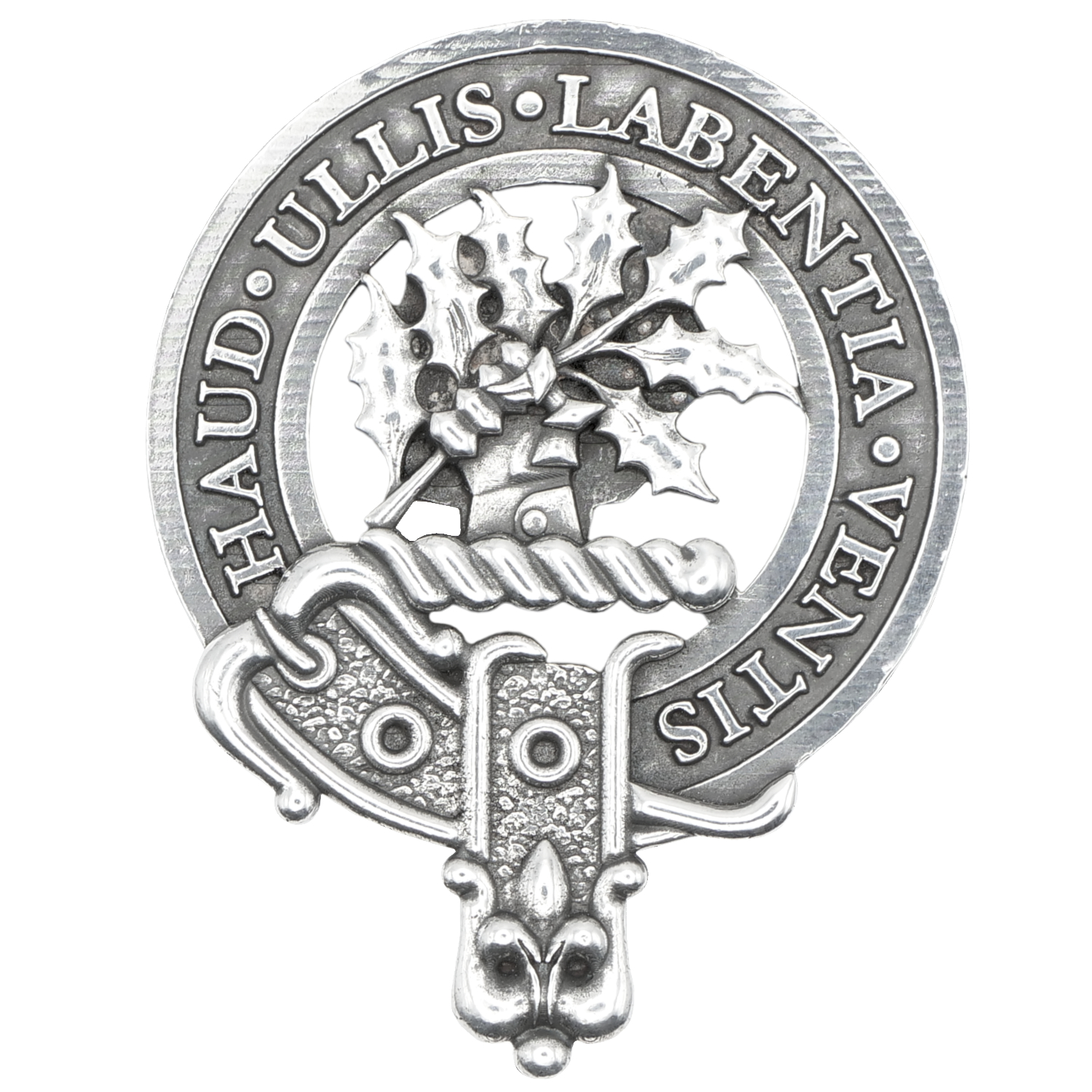
Just as the Irvings of the Borders are related to but distinct from the north eastern Irvines, so too is their heraldry. Like the Irvines we see the holly leaves, canting (visually punning) on the ‘vine/ving’ element of the name, but deliberately selecting a spiky and resilient plant, reflecting the qualities the families which to associate themselves with. These are tough people, who can defend themselves.
Irvine of Bonshaw is mentioned in Aslexander Nisbet’s System of Heraldy of the 1720s, but only the three holy leaves of the chief’s shield are mentioned, with no crest or motto. Crest and motto had been adopted by the time of Alexander Deuchar’s British Crests: Containing the Crests and Mottos of the Families of Great Britain and Ireland (1817).
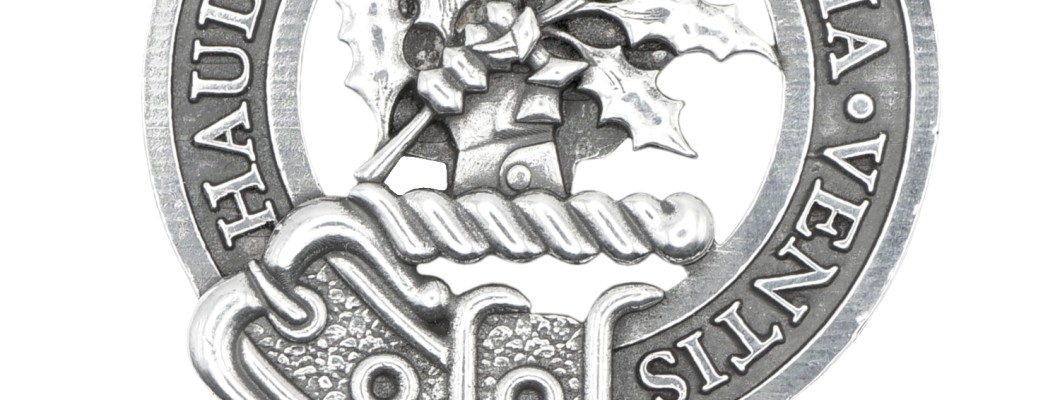
The crest of the Irvings of Bonshaw is a branch with precisely seven holly leaves, which are being grasped by an armoured arm. The arm represents the chief of the Irvings, the only one able to grasp and lead the prickly kindred, and lead them to victory; the branch is usually depicted being held aloft as if in triumph.
The motto is ‘Haud ullis labentia ventis’, yielding under no winds. At face value this is a statement of the fortitude of the Irvings. This line has a long history though, as it comes from the Roman poet Virgil, in book two of the Georgics, line 133. Appropriately enough, this book deals with trees and vines, but moves onto a celebration of Italy and the temperate nature of its countryside. And this countryside is what fuels Rome and makes it great. So though this quote the Irvings subtly stake themselves, through their steadfastness, as part of the foundation of Scottish prosperity in the same way.