






-240x240w.jpg "Handbags and Sporranbags")


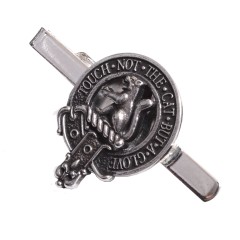











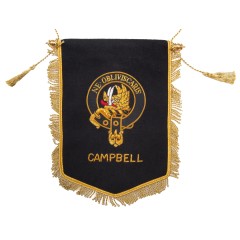









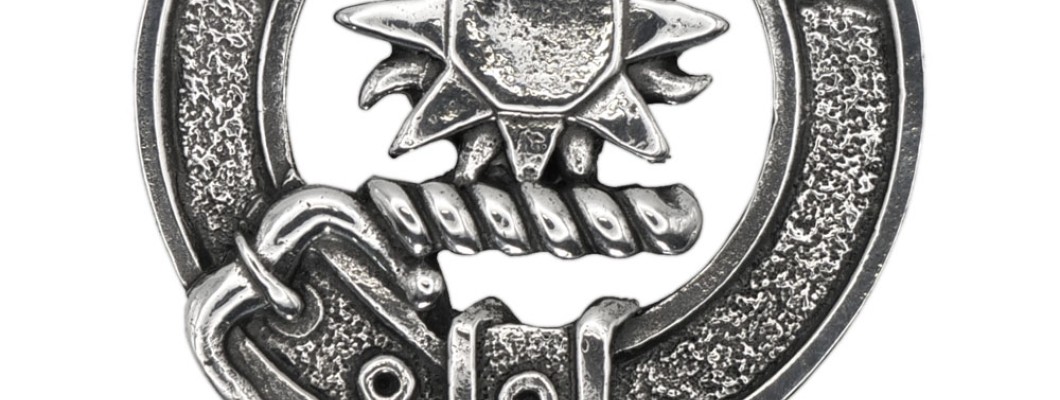
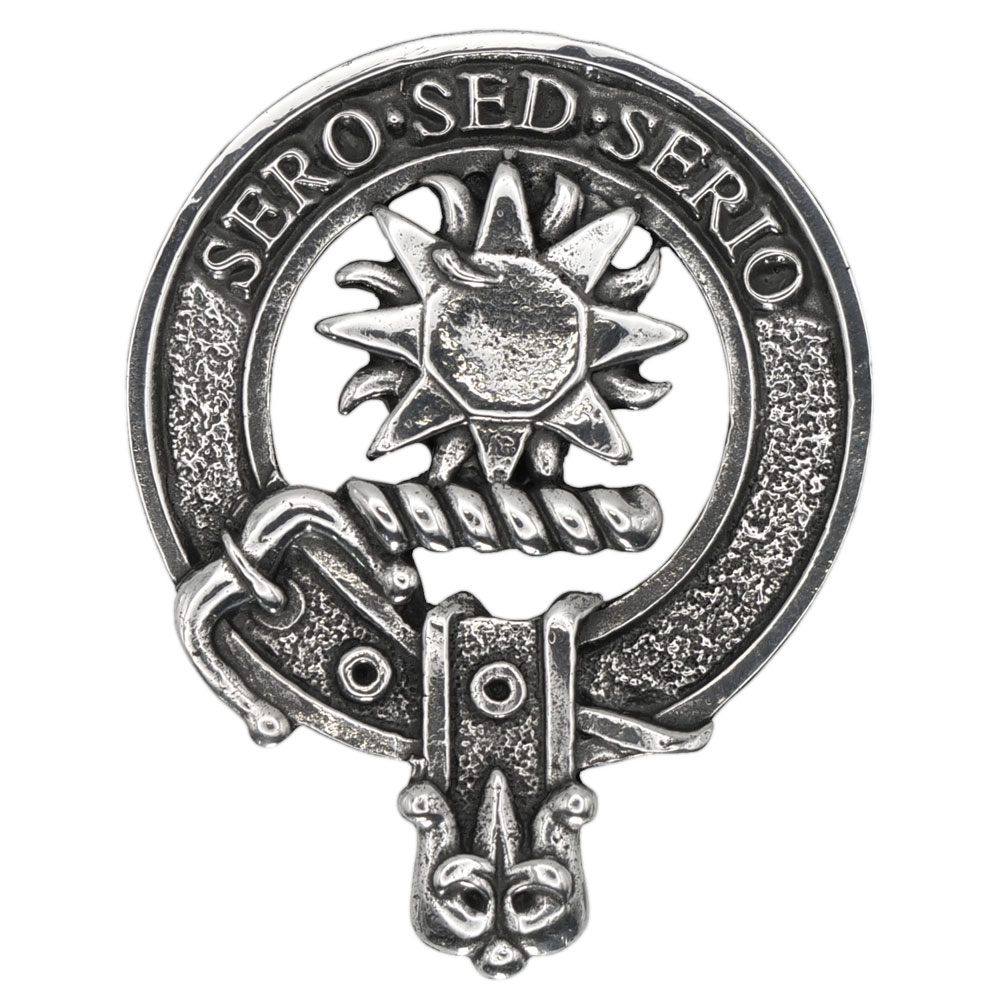
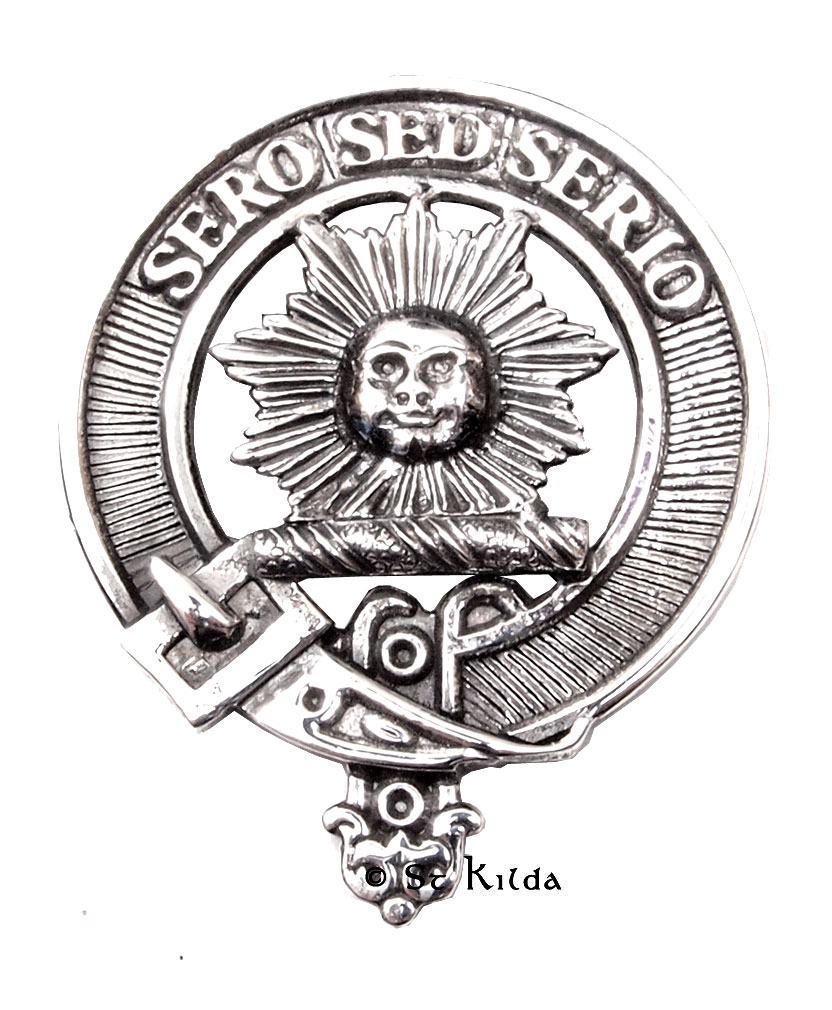
The crest of the chief of the Kerrs, the Marquess of Lothian, is ‘the sun in his splendour’ and the motto ‘Sero Sed Serio’, meaning late but in earnest. The sun can be drawn with or without a face – or crest doesn’t, but our old carrick mould does, so you can take your pick.
The sun was adopted when Mark Ker was created the 1st Earl of Lothian in 1606, and his descendants are now the chiefly line of the Kerrs, having folded various squabbling lines into one. By the 1610s the arms of Robert Kerr, second Earl of Lothian show that this line of had adopted the sun on their shield and crest. In the 1590s they were still using heraldry more associated with the abbey of Newbattle, from which their estate was created. However, the seals recorded in the 1610s suggest a different motto ‘Imit Ab Alto’ (Willam Rae MacDonald, Scottish Armorial Seals, 1904, 187). This ‘Imit Ab Alto’ is probably a garbling of Lux Venit Ab Alto, meaning ‘the light comes from on high’. That appears on the tombstone of Lady Yester, daughter of the 1st Earl of Lothian. So from an early time we see this line keen on the sun and a motto to emphasise that.
The more familiar ‘Sero Sed Serio’, ‘late but in earnest’ had been adopted by the 1720s, as recorded in Nisbet’s System of Heraldry.
The tradition is that both crest and motto refer to the battle of Ancrum Moor in 1545. The sun is because the setting sun blinded the English forces, allowing the Scots to decisively push back the English. In the early stages of the battle the Kerrs were supposedly on the English side, but decisively changed their minds, and joined into rout the invaders of Scotland. Hence ‘late but in earnest’: they were initially on the wrong side, but they ‘saw the light’ and hence turned the tide of battle.
This is a great story, but does it hold up to scrutiny?
All contemporary accounts of the battle underline how the sun was a major feature of the battle. George Buchanan’s, Rerum Scoticarum Historia (1582), chapter 21 says:
“But two things (wisely foreseen) were a great help to the Scots, for both the sun was almost at west, and darted with his full beams in the faces of the enemy, and also the wind, which was somewhat high, carried back the smoke of the gunpowder upon the battalions behind” https://philological.cal.bham.ac.uk/scothist/15eng.htm
However, there is no mention of the Kerrs or changing side in this account, or in Robert Linsday of Pitscottie’s. John Leslie’s 1571 history does have a hint at least. He mentions how the English had:
“a certain fear—not unfounded—which they conceived of our borderers, who in great number bore the red cross, which was known to the English men of war and served as a sign by which to recognise them. In groups they ran about, watching how the matter would turn.”
When the Scottish troops started to beat the English force, those Scottish Borderers who were on the English side then threw off the red crosses:
“But when the enemies fled and tried to save their lives, the borderers more sharply followed and pursued them.”
So in these contemporary accounts the sentiment of ‘sero sed serio’ doesn’t quite fit here. The battle was already won when the Borderers changed side. And there’s no mention of the Kerrs specifically.
The sun was adopted by Mark Kerr, second Lord Newbottle, whose like-named father would have been the man at the battle. This was prior to that Mark Kerr becoming abbot of Newbattle Abbey. If he was at the battle, he would have been in the retinue of his brother Walter Kerr of Cessford. By 1541 Walter was appointed by James V as Warden of the Middle March, a position of some standing, and no mere borderer. After James’ death in 1544, the regent, the Earl of Arran, accused Cessford of communicating with the English with the Earl of Angus. Which might imply he was on the English side. However, the Earl of Angus was one of the Scottish leaders at Ancrum Moor (Scots Peerage, vol.7, pp.335-6). So it would seem more likely that Kerr was part of the main Scottish army. This perhaps fits with the sun and the earlier motto ‘the light comes from on high’ – why would that be important to the Kerrs if they only changed sides after the sun had already played its part? We might assume the symbolism shows that they were on the Scots side all along.
If this is the reading, then Sero Sed Serio probably refers to a later forgotten incident, but projected back by later generations as a good story. The sun at least seems like a genuine reference to the battle.