Out Of Stock
Clan Campbell
£135.00
Ex Tax: £112.50
- Model: F-RM016FG
Find your tartan and view swatches with our Tartan Finder. You can search for tartans by family name, clan name or colour or just browse our A-Z list.
Search for your tartan by entering the tartan, clan, surname or location below:
You searched for: tartans. There are results. Click a tartan to select it for your item, or search again
Too many results? You can filter your results by a stripe colour.You searched for: . There are results. Click a tartan to select it for your item, or search again
You searched for: Tartans beginning with . There are results. Click a tartan to select it for your item, or search again
For most of Scottish history the Campbells have dominated
the West Highlands and Isles of Scotland. In the middle ages they claimed
descent from no less than King Arthur and their inheritance included the right
of ‘leadership of the Britons’. Whether this is true is open to debate. What is
clear is that they have exercised a huge influence over most of Scottish
history. It may be safe to assume, from the various pieces of evidence
fossilised in the various genealogies is that their place of origin may have
been among the ancient Britons of Strathclyde, whose kingdom stretched from
just north of Dumbarton, right down into Cumbria and the west of what is now
Northern England. This kingdom was extinguished in the eleventh century.
It is, however, in the Gaelic cultural sphere that the
Campbells came to be most associated. Their name, for instance, comes from the
Gaelic words Cam ‘crooked’ and Béal ‘mouth’. The first Campbell found in
contemporary Scottish records is Gillespie, in 1263. Early grants of land to
him and his relations were almost all in east-central Scotland, although the
family's first connection with Argyll appears to have come about some
generations before, with the marriage of a Campbell to the dynastic heiress of
the O'Duines, who brought with her the lordship of Loch Awe. From this seed the
Campbells grew.
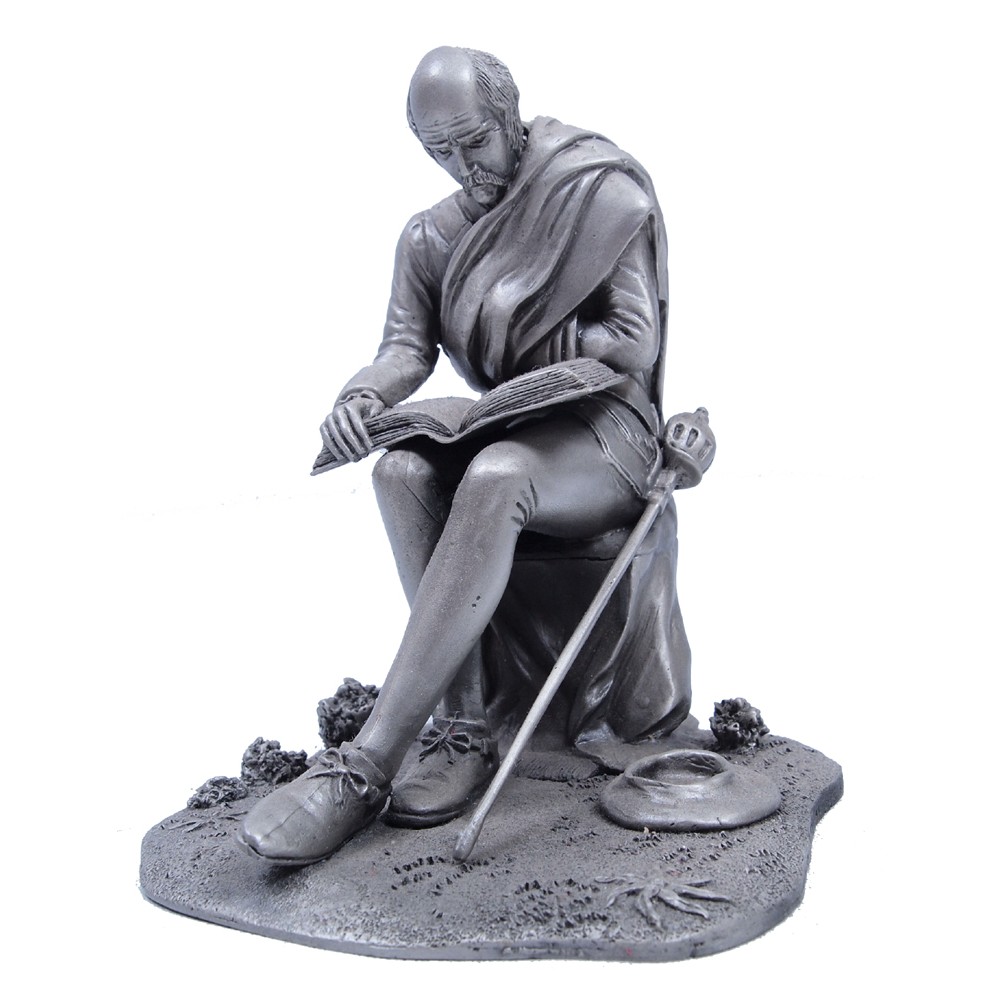
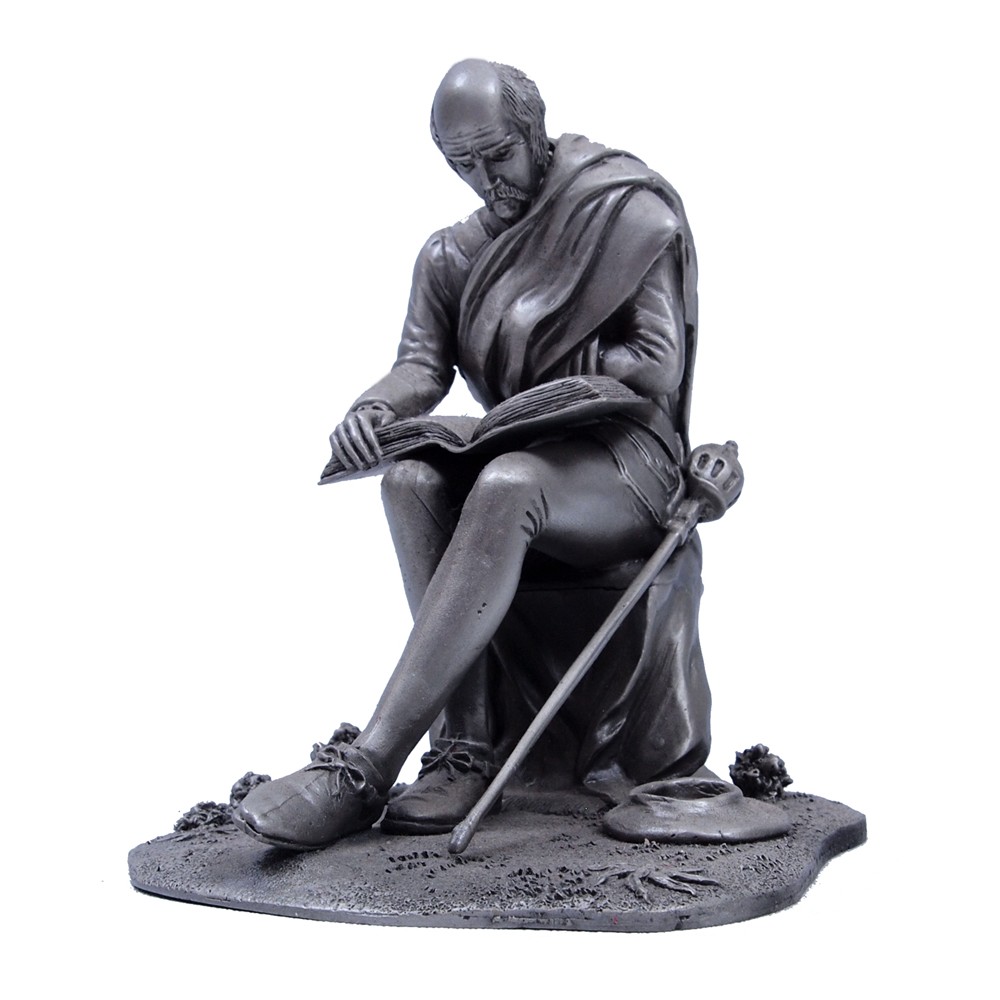
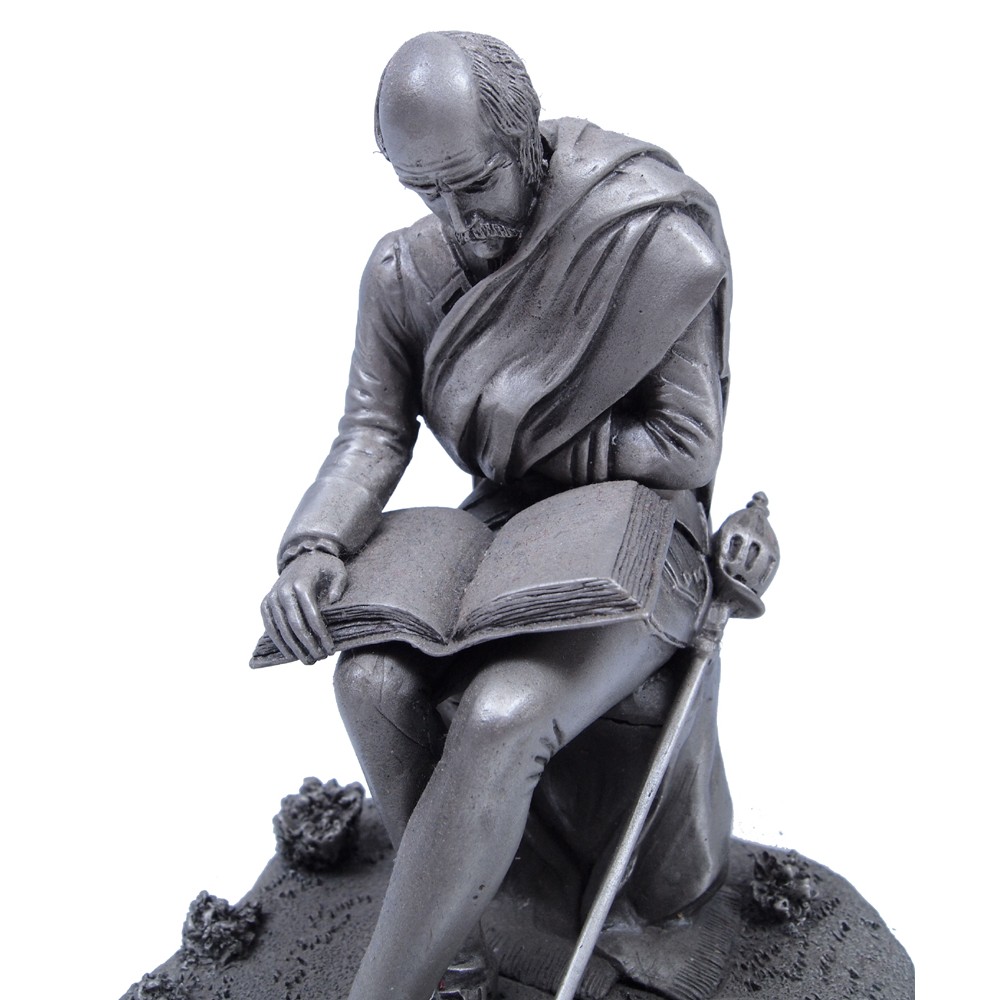
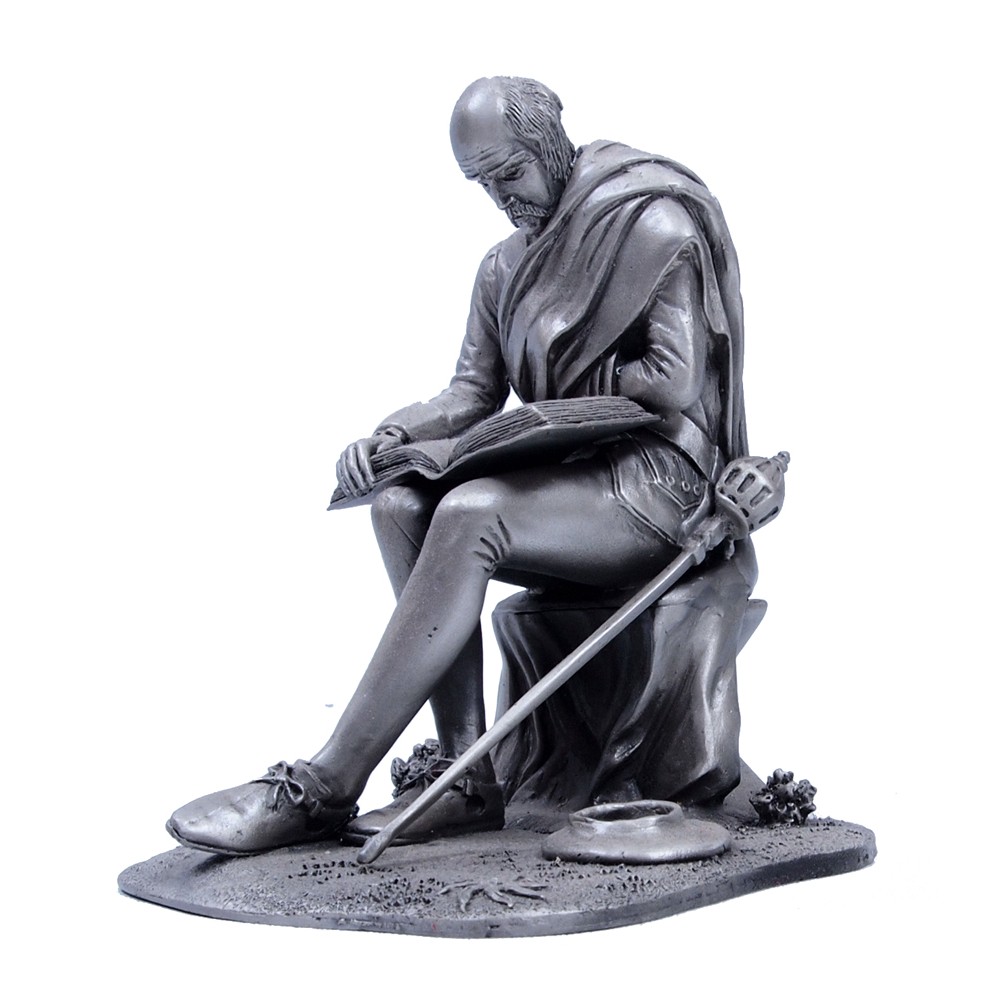
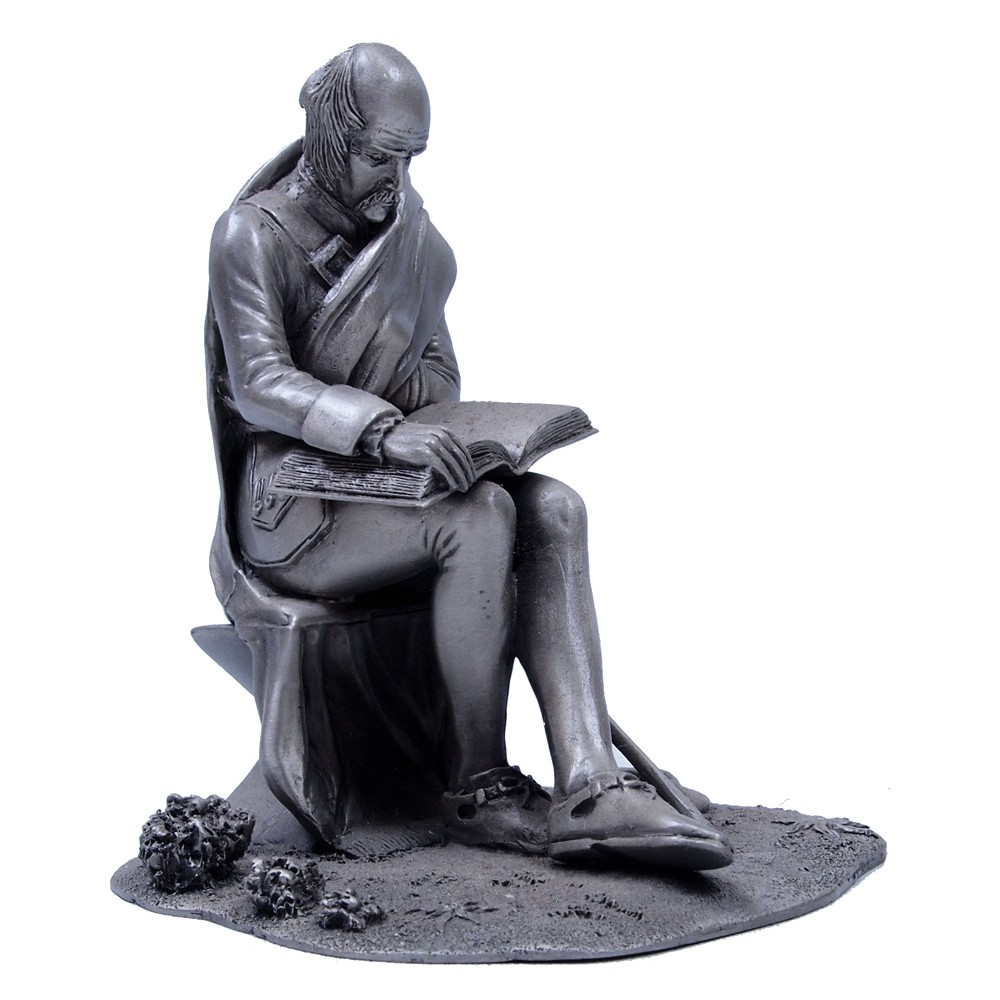
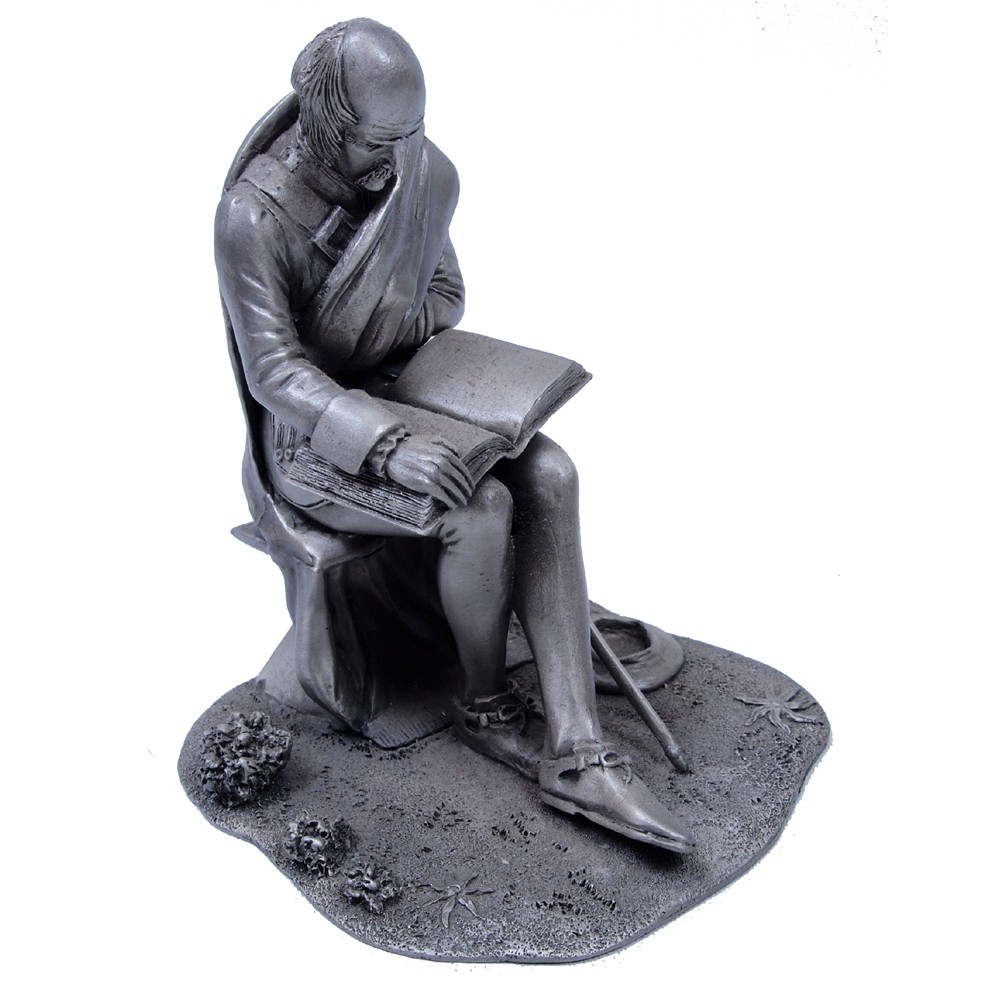
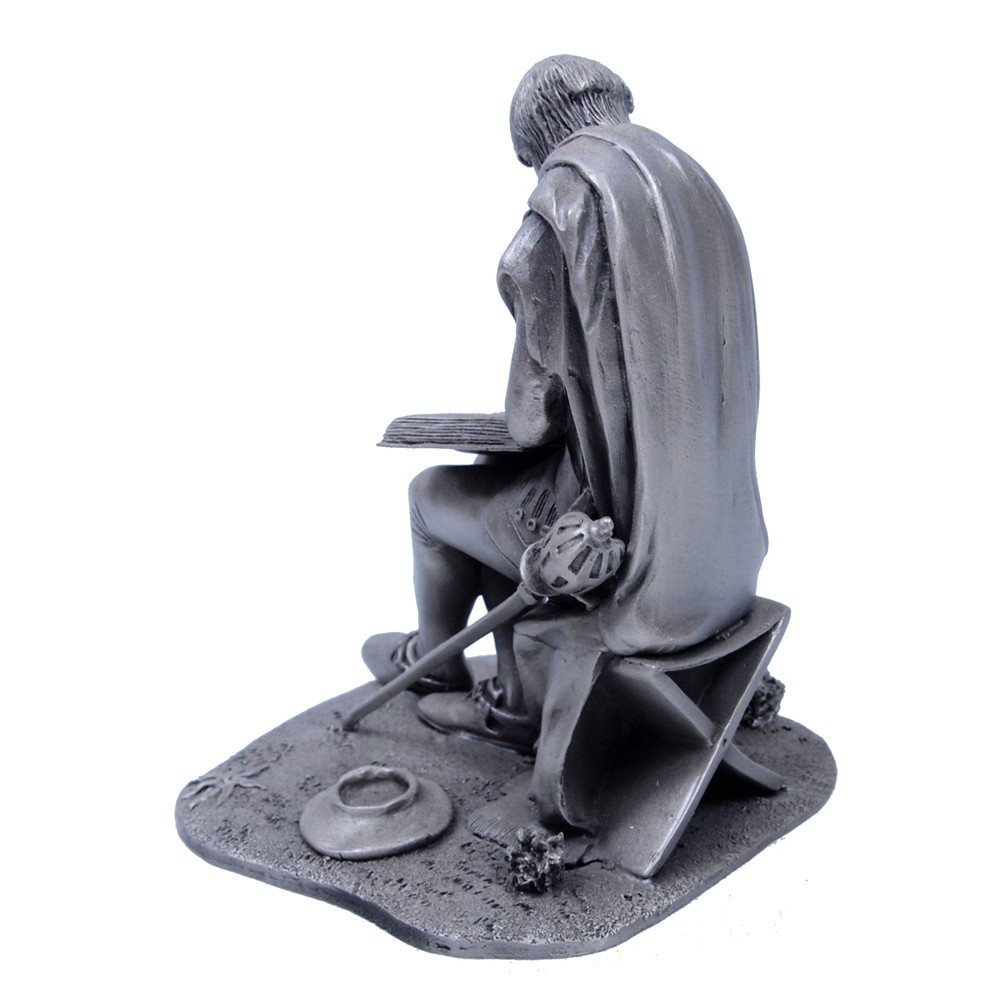
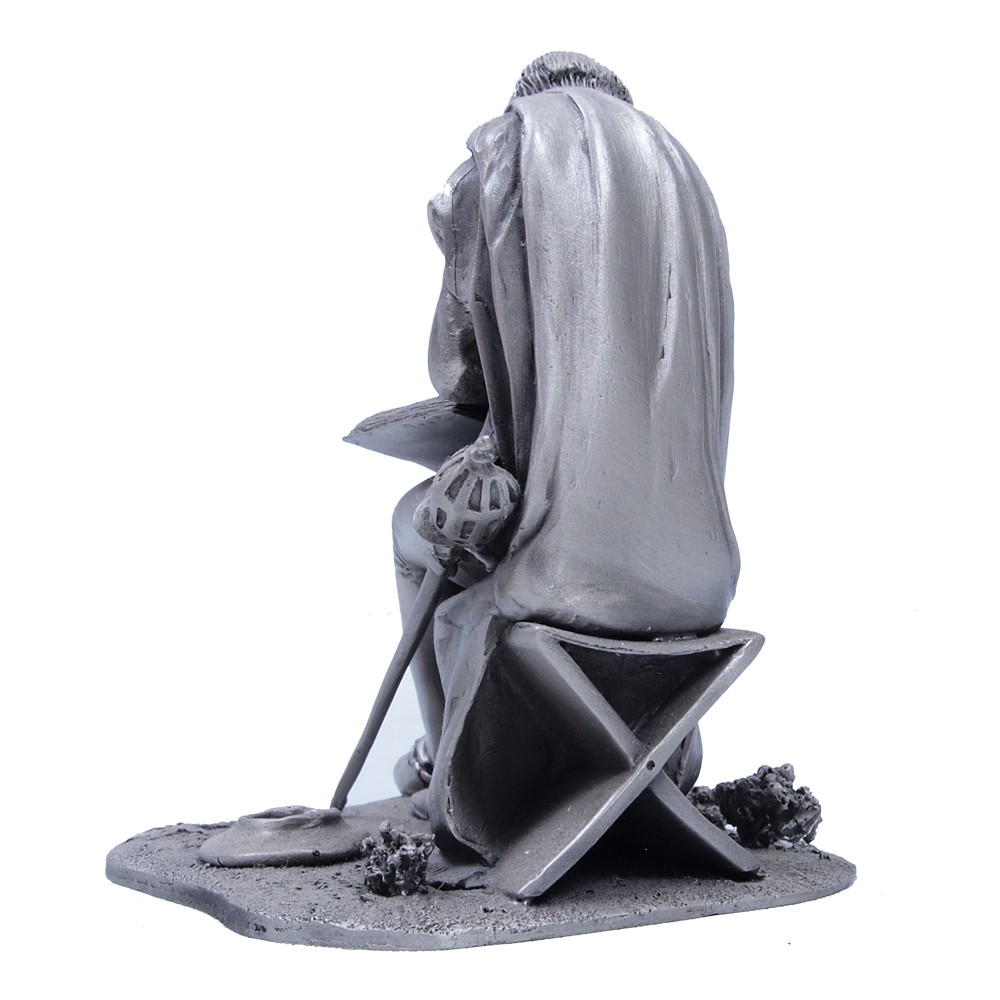
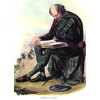
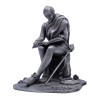
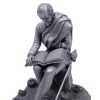
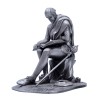
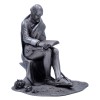
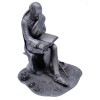
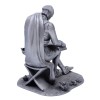
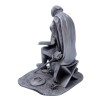
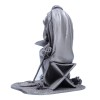
R. R. McIan described this figure thus:
‘The artist, in accordance with the character of the family of
Argyle, who were distinguished as staunch adherents of the ‘solemn league’, has
exhibited the figure in the character of one of those doughty opponents of
prelacy, poring over the sacred volume to strengthen his resolution to stand
for the covenanted work of Scotland's reformation. He is also, as was the practice
with those worthies, provided with his trusty broadsword, as if prepared for an
attack by Claverhouse and his formidable dragoons'.
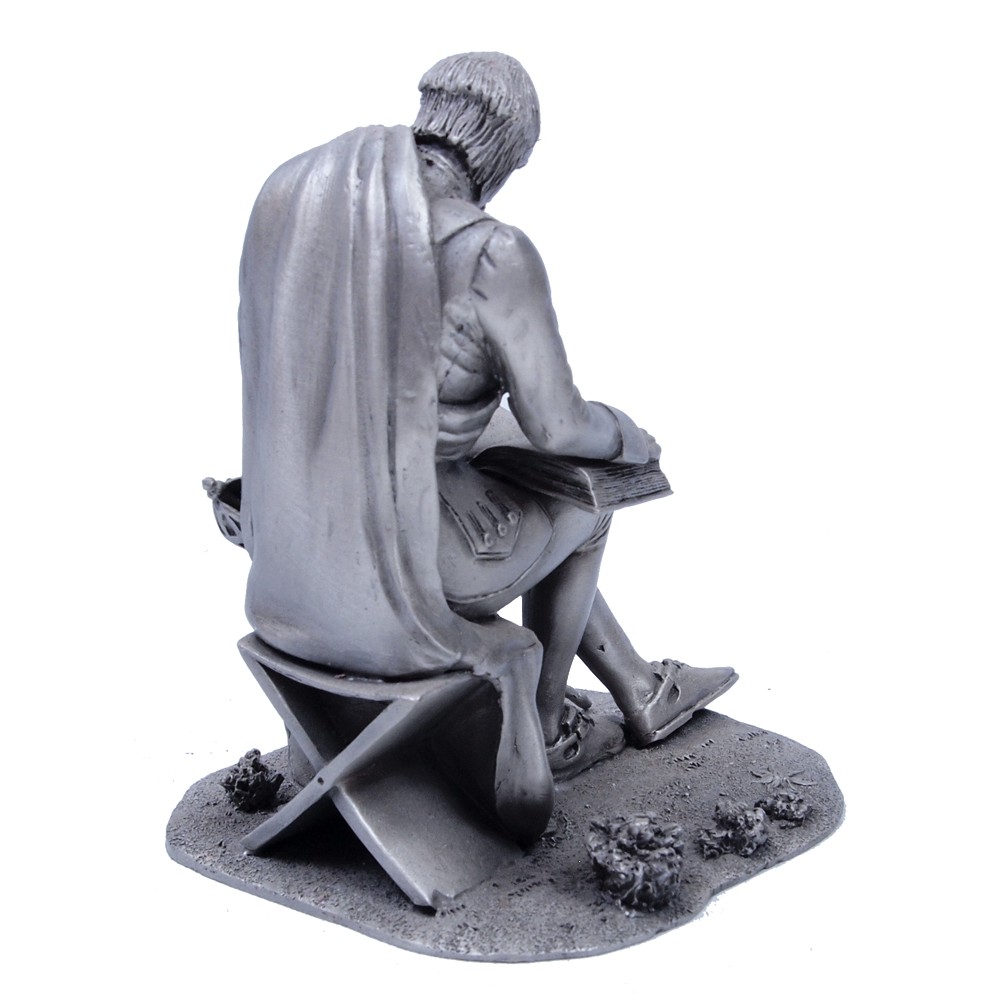
The figurine weighs just over 0.8 kilos. It stands 11.5cm tall, on a base rougly 9.5cm by 9.5cm.