There are several possible Gaelic origins for this name, but
the most likely appears to be 'bheathain', meaning 'lively one'. According to
tradition, the ancestor of the Macbains, a noble scion of the royal house of
Macbeth, sought out his kin among the descendants of Gillichattan Mor, more
commonly called the Clan Chattan, after Malcolm IV finally broke the unruly
remnants of the Mormaers of Moray.
The Macbains supported the Jacobite rising of 1715, and many
were transported to the plantations in Virginia, Maryland and South Carolina
after the Stuart defeat. This did not deter Gillies Mor Macbean, grandson of
the 12th chief, from taking up a commission as major to fight for Bonnie Prince
Charlie, the 'Young Pretender'. At the Battle of Culloden in 1746, Gillies, a
giant of a man said to be at least 6 ft 4 in, distinguished himself as he
personally attempted to prevent Government dragoons breaking through to assault
the Highlanders in the flank. He died in the attempt but not before he had
taken 14 of the enemy with him. After Culloden the chief struggled to keep the
remaining clan lands together, and they were finally sold in 1760. In more
recent times, the chiefly line has flourished, first in Canada and now in the
United States. The chiefs have retrieved some of the clan lands, establishing a
memorial park on the shores of Loch Ness.
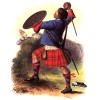
R. R. McIan described his figure thus:
"The figure is intended to represent the undaunted Gillies,
dealing out his deadly blows on those who successively advanced through the
breach in the wall. Those who witness the parade of troops on review, the music
playing, and the columns going through the various evolutions with mechanical
precision, amid the swelling notes of martial music, every individual being so
clean and neatly dressed, are apt to believe that in the field of battle it is
much the same. On these deadly occasions, however, there is often no time for
nicety, and as in this case, the army having been the previous night occupied
in a harassing march to surprise the royal camp, we may well believe that the
Highlanders in general did not present a very smart appearance. In the turmoil
of battle, caps and bonnets, arms and accoutrements, are scattered about, and
the combatants are only intent on achieving a triumph. The figure is painted in
the tartan of the MacIntoshes, which, as major of that battalion, Mac Bean
would appropriately wear. The Highlanders were fond of ornament, and solicitous to
have rich lace, silver buckles and buttons, &c., that should they fall in
battle, or die at a distance from home, there might be sufficient value in
their clothing to defray the expense of a respectable funeral."
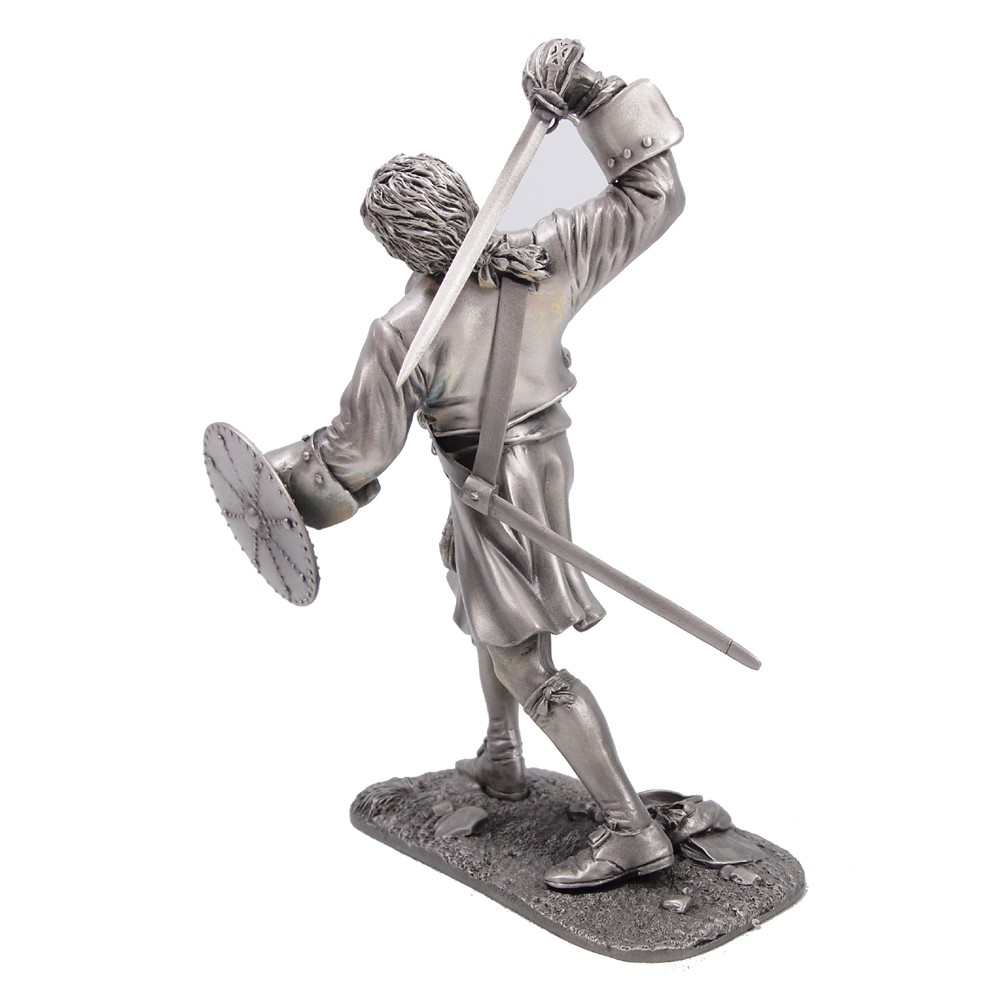
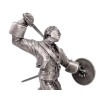
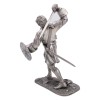
The figurine weighs just over 0.66 kilos. It stands 16cm tall, on a base rougly 10cm by 5cm.









-240x240w.jpg "Handbags and Sporranbags")