This name is rendered in Gaelic as 'Maccoinneach', meaning
'son of the bright one'. The Mackenzies are believed to descend from Gillean of
the Aird, the twelfth-century ancestor of the earls of Ross. By 1267 the clan
were settled at Eilean Donan, the great castle at Loch Duich. By the beginning
of the seventeenth century, the Mackenzie territory extended from the Black
Isles to the Outer Hebrides. In the eighteenth century the MacKenzies were
Jacobites and the third Earl of Cromartie led them in 1745. They were
victorious at the Battle of Falkirk, although defeated at the Battle of
Littleferry, which prevented the main body of the MacKenzies from participating
at the doomed Battle of Culloden, although a number of men did serve and die
there.
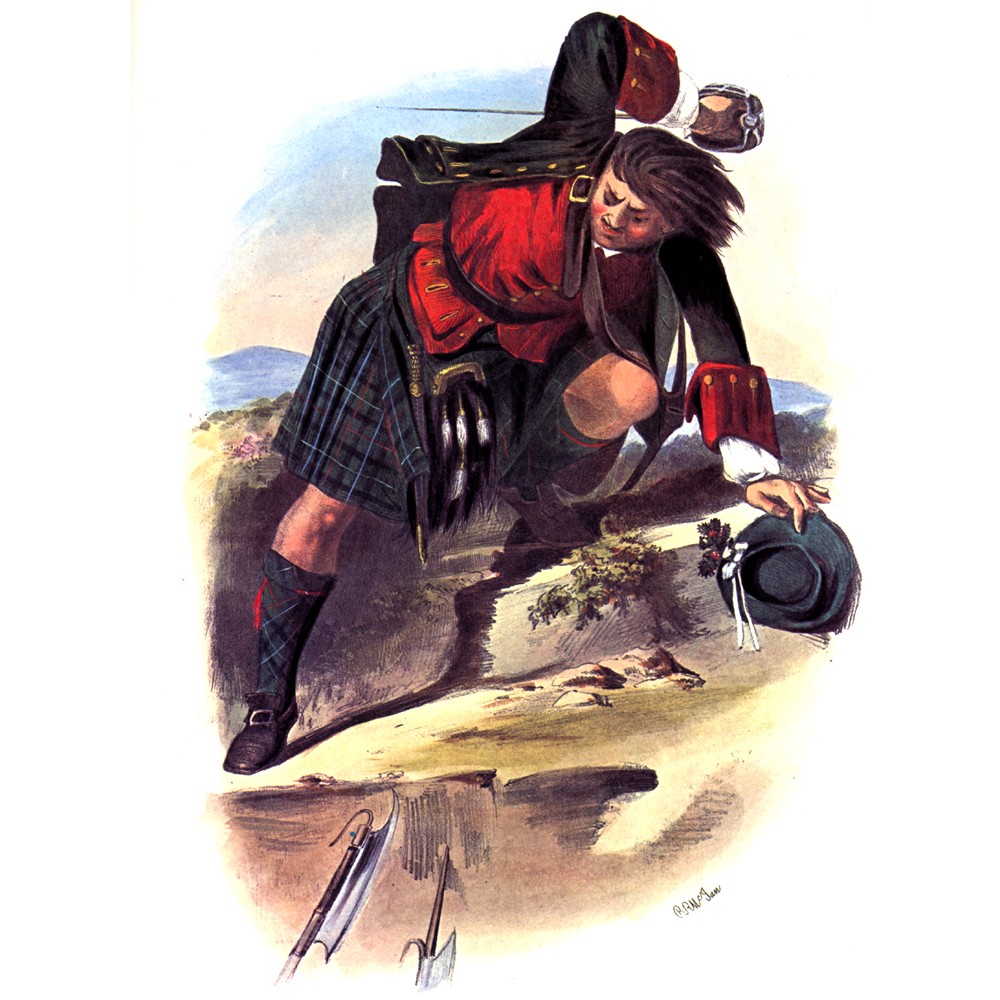
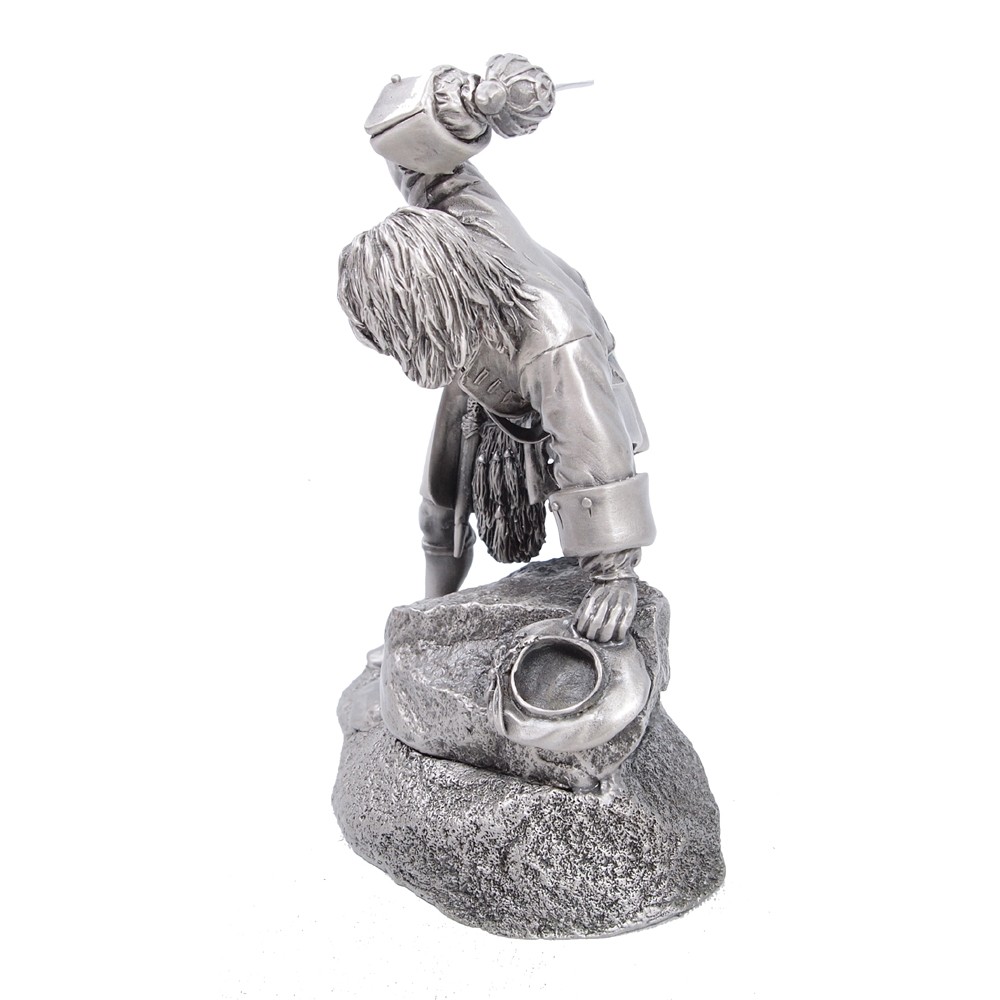
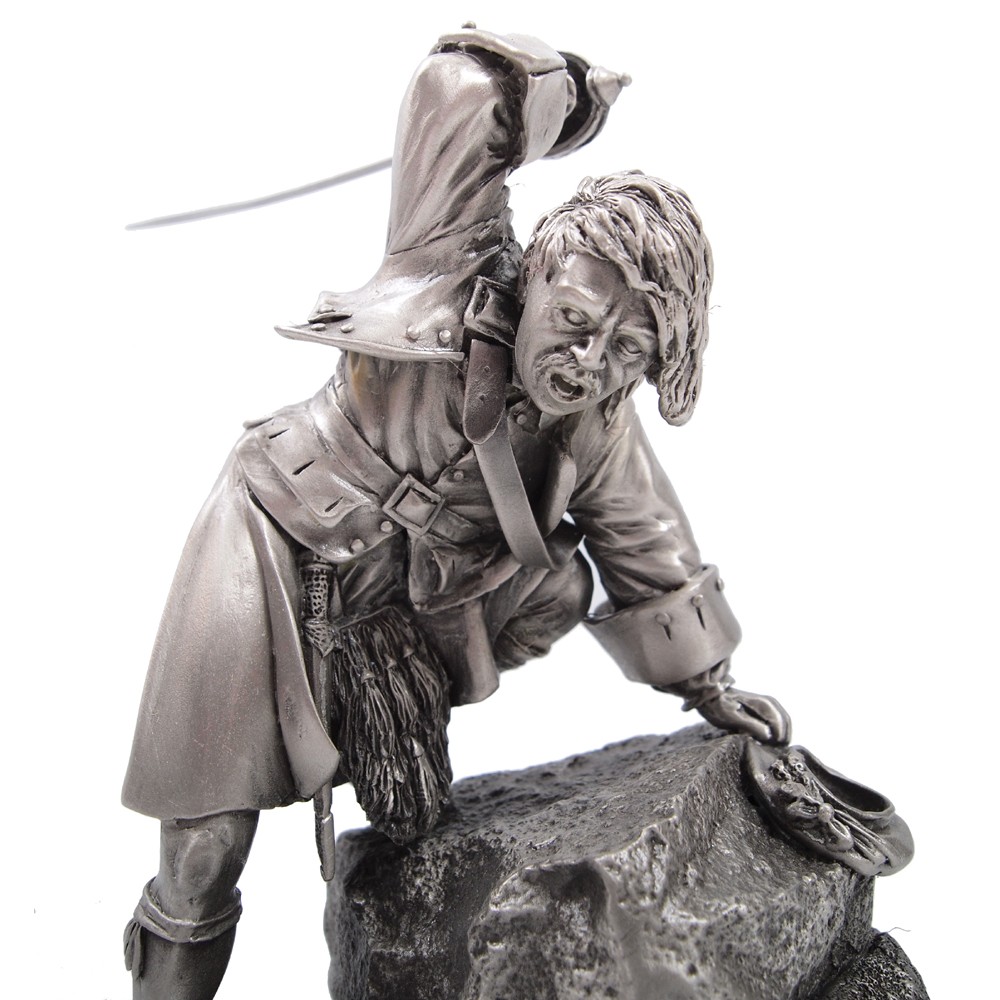
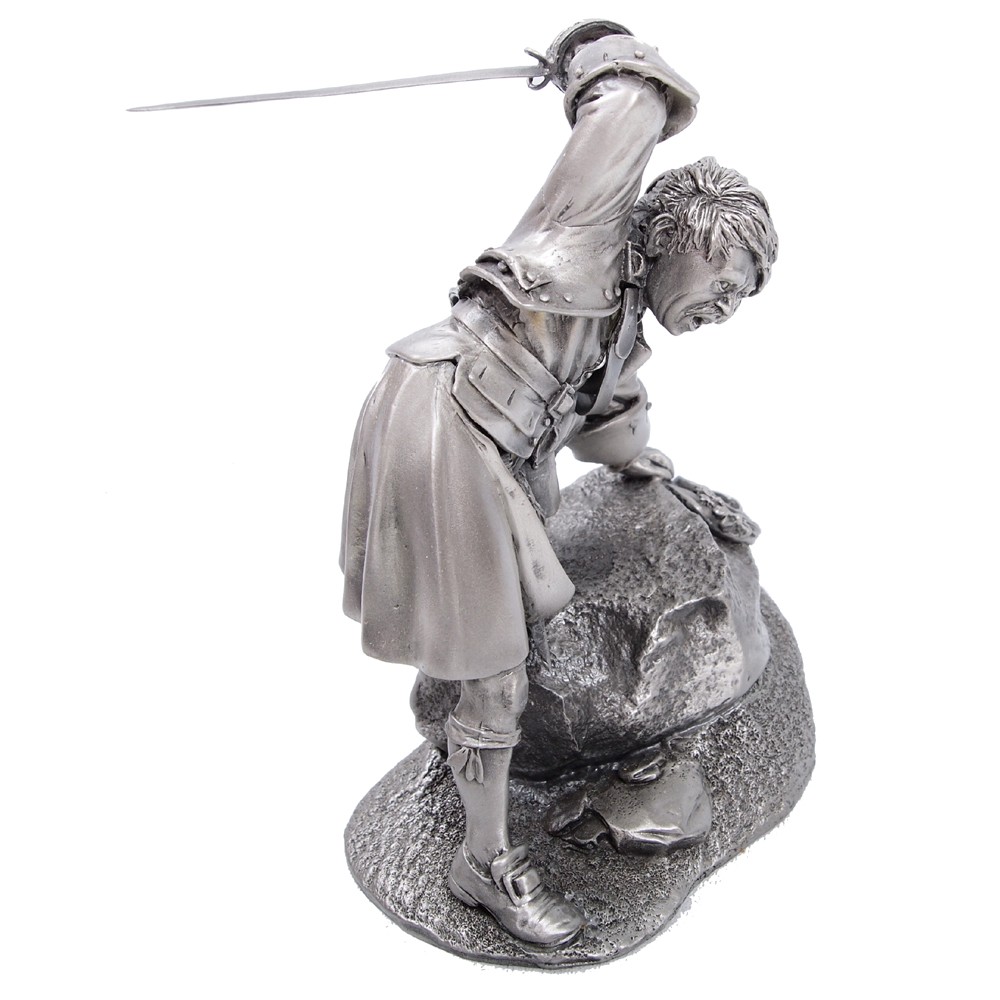
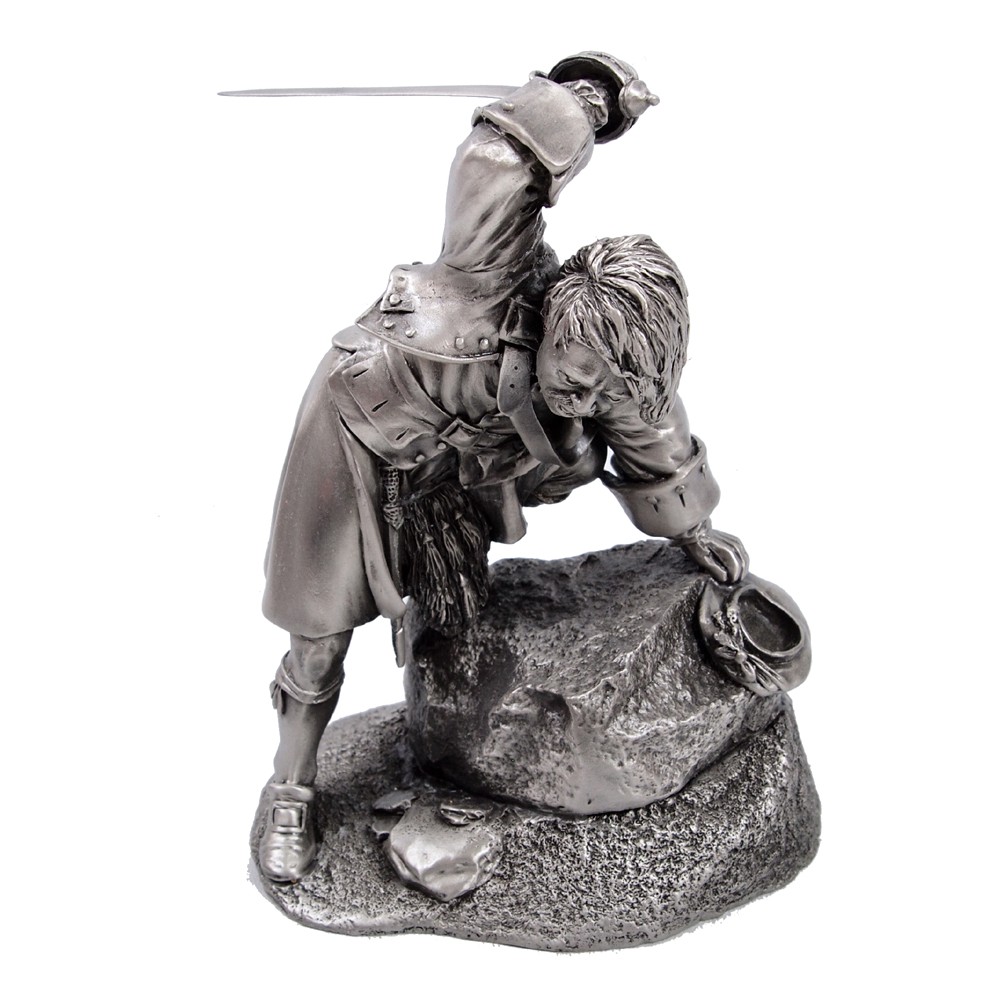
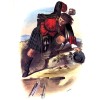
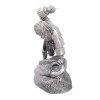
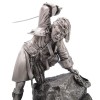
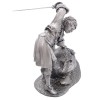
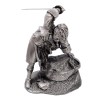
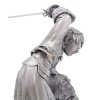
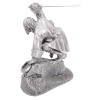
R. R. McIan described his figure thus:
"The sketch represents a Jacobite fugitive, who has escaped from
the field of Culloden, and still retains in his bonnet the white cockade of the
Stewarts, and the badge of his clan, for mounting which many of his countrymen
were then transported as felons. The green jacket and red cuffs were a favourite
style at that time. Hose and kilt are of the clan tartan. The waist-belt was
often worn around the skirts of the jacket, as it is shewn here, passing over
the long waistcoat. The dirk represents one in Mr. Mac Tan's possession, the
hilt of which is rather remarkable in shape. Shoes and buckles, a late
innovation on the original costume, were generally worn at the time. This
Cearnach is evidently keeping at bay some of the "Hanoverian party,"
indicated by the weapons which are seen bristling before him."
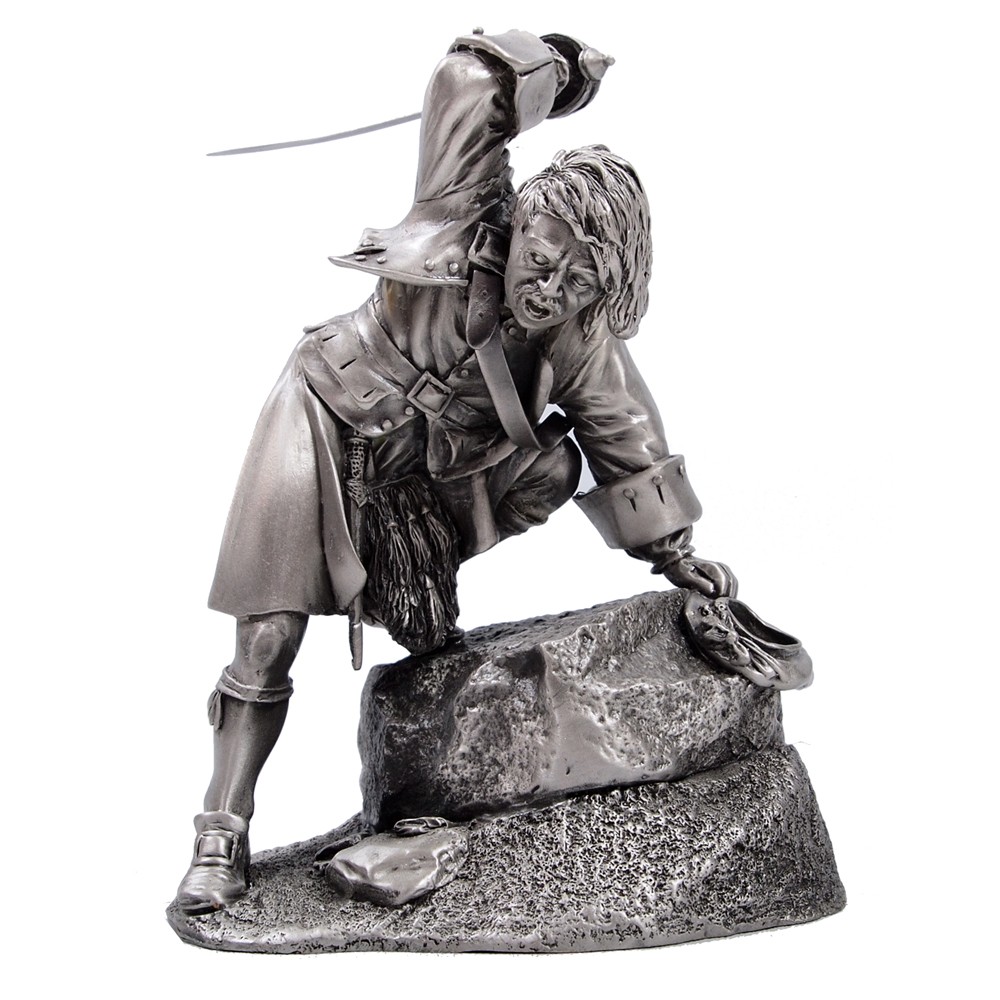
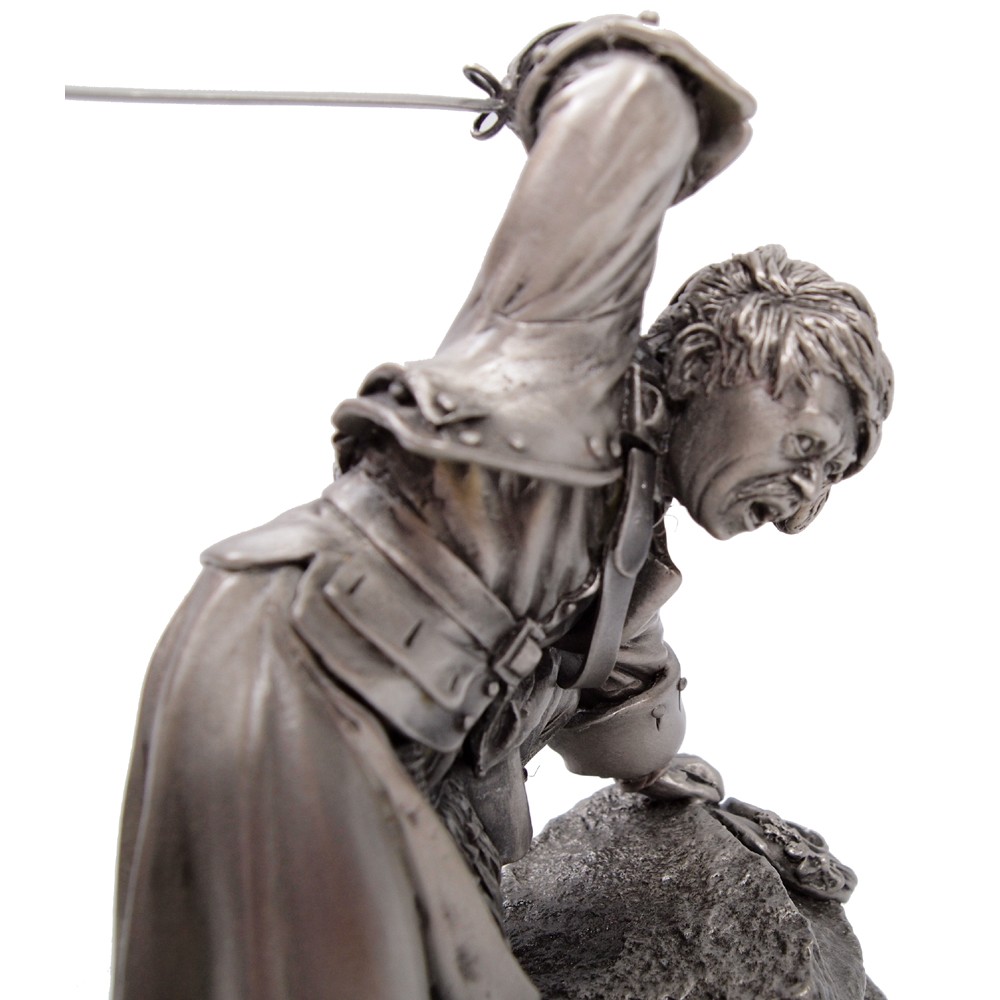
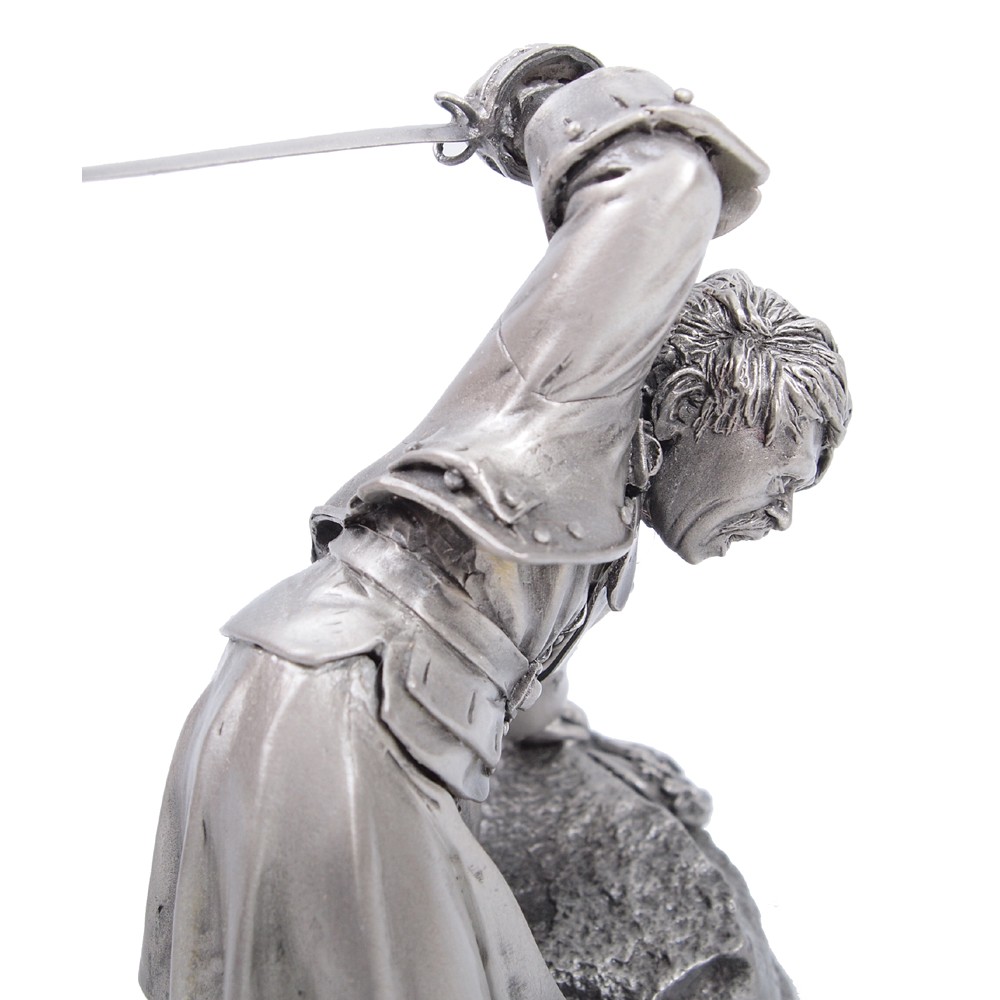
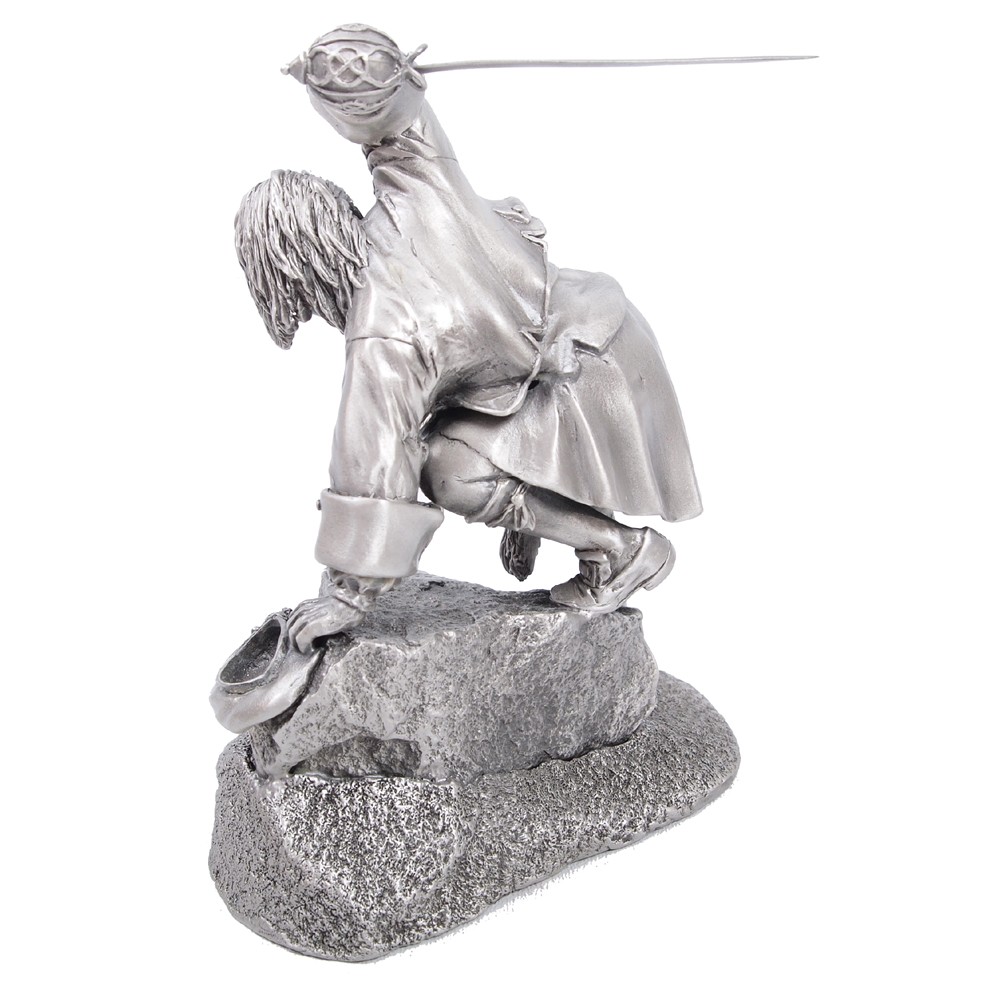
The figurine weighs a little under 0.77 kilos. It stands 14cm tall, on a base roughly 10cm by 7cm.








-240x240w.jpg "Handbags and Sporranbags")